
naseehath.com

Blogs

How Website Design Influences Customer Trust
Blogs

How Website Design Influences Customer Trust

How Website Design Influences Customer Trust A few months back, a client of mine showed me his website and said, ” My shop is genuinely good, people who visit love it. But online enquiries are almost zero. What is wrong?” I opened the site on my phone. It took almost eight seconds to load, the phone number was hidden somewhere in the footer, and the first image was a blurry photo from what looked like a 2014 phone camera. I did not need any analytics tool to understand the problem. If I, a marketer who was specifically looking at his site, felt a little unsure, imagine what a random customer felt in those first five seconds. That is the thing about website design. People do not say “this website has poor design”. They just quietly close the tab and move on to the next business. And they never tell you why. Trust Is Decided Much Faster Than You Think When someone lands on your website, they are not reading your content carefully yet. They are making a quick gut judgement. Does this look like a real, proper business? Can I rely on these people with my money? This judgement happens in a few seconds, and it is based almost entirely on how the site looks and feels, not on what is written in it. A clean, organised design says “these people are serious about their work”. A cluttered, slow, or outdated one says the opposite, even if the business itself is excellent. In Kerala especially, where people are naturally careful about who they give money to, this first impression carries even more weight. We ask around, we check reviews, we compare. A website is often the first place that comparison happens. The Design Elements That Quietly Build or Break Trust Over the years of working with local businesses, I have seen the same few things make the biggest difference. Loading speed. If your website takes too long to open, people assume the business is careless or outdated. Most visitors here browse on mobile data, and they will not wait. A fast site feels reliable before anyone reads a single word. Mobile friendliness. A site that looks perfect on a laptop but has tiny text, overlapping buttons, or sideways scrolling on a phone loses customers immediately. Since most people in Kerala search from their phones, this is not optional anymore. Clear, simple layout. When a visitor lands on your page, they should understand within a few seconds what you do and what to do next. Too many colours, too many popups, too much text all at once, it creates confusion, and confused people do not buy. Real photos instead of stock images. This one is underrated. Pictures of your actual shop, your actual team, your actual work, they build far more trust than generic stock photos that every other website also uses. People can sense when something is real. Visible contact details. If a customer has to hunt for your phone number or WhatsApp button, you are already losing them. A business that makes itself easy to contact feels more honest and more confident. Consistent branding. Same logo, same colours, same tone across your website, Instagram, and Google profile. When everything looks like it belongs together, the business feels established and reliable. Proof on the page. Customer reviews, photos of completed work, client logos, simple testimonials. These tell a new visitor that other real people have already trusted you and were happy with it. Security basics. The small padlock icon in the browser, meaning your site runs on HTTPS. If a browser shows “not secure” next to your business name, many customers will leave without a second thought. Where Local Businesses Usually Slip I see the same mistakes again and again with small businesses across Malappuram and the rest of Kerala. Many websites are built once, by whoever was cheapest, and then never touched again. The design slowly looks older, the information goes outdated, some pages stop working, and the business owner has no idea this is quietly costing them customers. Others try to fit everything on the homepage. Every service, every offer, every photo, all together. It feels like a crowded notice board, not a professional business. And then there are websites designed purely to look impressive, with heavy animations and fancy effects, but slow, confusing, and difficult to actually use. A beautiful website that does not help the customer is just decoration. A Simple Way to Test Your Own Website Ask a friend or family member who has never seen your website to open it on their phone and tell you, within five seconds, what your business does and how they would contact you. If they struggle, that is your answer. You do not need any expensive tool for this, just an honest outsider.   Trust Building Design vs Trust Breaking Design Sometimes it is easier to see the difference side by side.     Builds Trust Breaks Trust Loading Opens in two to three seconds on mobile data Takes eight seconds, visitor leaves midway Photos Real shop, real team, real work Same stock images every other site uses Contact details Phone and WhatsApp button visible on top Hidden somewhere in the footer Layout One clear message and one clear next step Everything crowded on the homepage Reviews Genuine customer feedback with names No proof, or obviously fake looking praise Updates Fresh offers, current information Old festival banner still showing in March Security HTTPS padlock showing “Not secure” warning in the browser Quick Checklist Before You Start Does your website load in under three seconds on a mobile phone? Can a new visitor understand what you offer within five seconds of landing? Is your phone number or WhatsApp button visible without scrolling or searching? Are you using real photos of your business instead of generic stock images? Does your site show genuine customer reviews or testimonials somewhere visible? Is your website running on HTTPS with the padlock showing […]
Blogs

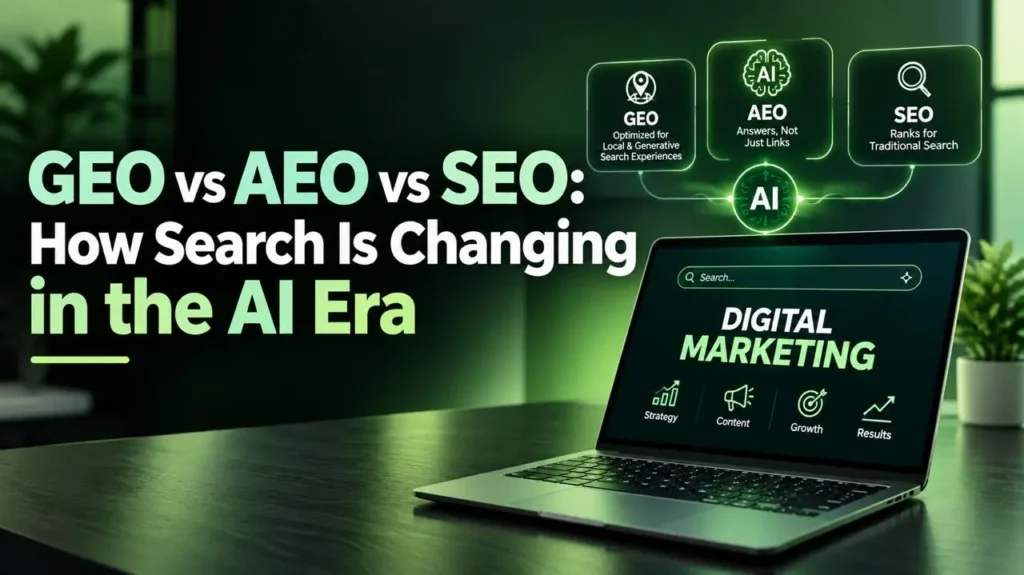
GEO vs AEO vs SEO: How Search Is Changing in the AI Era

GEO vs AEO vs SEO: How Search Is Changing in the AI Era Three years back, if someone asked me what my job involves, I would say one word, SEO. Simple. Get a website ranking on Google, bring in traffic, convert that traffic into leads. That was the whole game. Now when people ask me the same question, I end up explaining three different terms, SEO, AEO, and GEO. Most business owners I talk to have never even heard of the last two, and honestly, even a lot of marketers are still catching up. So let me break this down the way I would explain it to a shop owner sitting across the table, not in confusing textbook language.   Starting With What We Already Know, SEO SEO, Search Engine Optimisation, is about getting your website to show up when someone searches on Google. You have heard this term a hundred times by now. Keywords, backlinks, page speed, Google Business Profile, all of this falls under SEO. It has been around for over two decades and it still works, it is just no longer the only thing that matters.   Then Came AEO, Answer Engine Optimisation This is the one I have written about before on this blog. AEO is about optimising your content so that AI tools like ChatGPT, Google AI Overviews, or Perplexity pick your business as the direct answer to a question, sometimes without the user clicking on any website at all. If someone asks an AI tool “best digital marketing expert in Malappuram”, AEO decides whether that AI mentions your name or someone else’s, based on how clear, specific, and consistent your information is across the internet. Now the Newer Term, GEO GEO stands for Generative Engine Optimisation, and it is closely related to AEO but slightly broader. While AEO focuses specifically on being picked as an answer, GEO is about how your brand, content, and information get pulled into any AI generated response, whether that is a direct answer, a summary, a comparison, or even a recommendation inside a longer AI generated piece of content. Think of it this way. AEO is about winning the direct question. GEO is about how visible and well represented your brand is across the entire world of AI generated content, including summaries, comparisons, and even AI written articles that might mention businesses like yours. The line between these two is still forming as these technologies evolve, and honestly, the industry itself has not fully settled on where one ends and the other begins. But understanding both matters more than getting stuck on the exact definition. Why All Three Matter Together Now Here is something important that a lot of people get wrong. This is not a case of SEO becoming useless because of AEO and GEO. It is more like three layers stacked on top of each other. SEO gets your website found and ranked. AEO gets your business mentioned when someone asks an AI tool a direct question. GEO gets your brand represented properly across the wider AI generated content ecosystem, summaries, comparisons, recommendations, all of it. A business ignoring SEO completely will struggle with the foundation. A business only doing SEO and ignoring AEO and GEO will slowly lose visibility as more people shift from typing into Google towards asking AI tools directly. The smart approach right now is building all three together, not picking one over the others. What This Actually Means for a Business in Kerala For a small or medium business here in Malappuram or anywhere in Kerala, this might sound like a lot of new jargon to worry about. But practically, a lot of the groundwork overlaps. Clear, specific website content helps SEO, AEO, and GEO all at once. Consistent business information across your website, Google profile, and directories helps all three too. Genuine customer reviews with real details help all three. You are not starting three separate projects, you are building one strong foundation that happens to serve all three purposes. The businesses that will struggle are the ones still relying purely on vague marketing language, inconsistent information across platforms, and outdated or thin websites. AI systems, whether it is a search engine, an answer engine, or a generative engine, all reward clarity and specificity over generic claims. SEO vs AEO vs GEO, Side by Side   SEO AEO GEO Full form Search Engine Optimisation Answer Engine Optimisation Generative Engine Optimisation Main goal Rank on search results page Become the direct AI answer Be represented across AI generated content Where it appears Google search results ChatGPT, AI Overviews, voice search Summaries, comparisons, AI written content Core focus Keywords, backlinks, site speed Clarity, consistency, structured answers Broad brand visibility across AI ecosystem Still relevant Yes, absolutely Yes, growing fast Yes, still early and evolving A Simple Example to Tie This Together Imagine someone in Kerala typing “best catering service for weddings in Malappuram” into Google. That is SEO territory, your website ranking matters here. Now imagine the same person asking ChatGPT directly, “which catering service should I book for a wedding in Malappuram”. That is AEO, your business needs to be the answer AI confidently gives. Now imagine someone asking an AI tool to write a longer piece, “compare the top catering options in Malappuram with pricing and specialties”. That is GEO, your business needs to be represented accurately and positively within that broader AI generated comparison, not just as a direct single answer. Same business, three different battles, and increasingly, all three are happening at the same time, every single day. Quick Checklist Before You Start Is your website content clear and specific, or filled with generic marketing language? Is your business information identical across your website, Google profile, and other listings? Do you have genuine, detailed customer reviews across platforms? Have you tried asking an AI tool a question a potential customer might ask about your industry? Is your content structured with clear headings and direct answers, not long unclear […]

Blogs

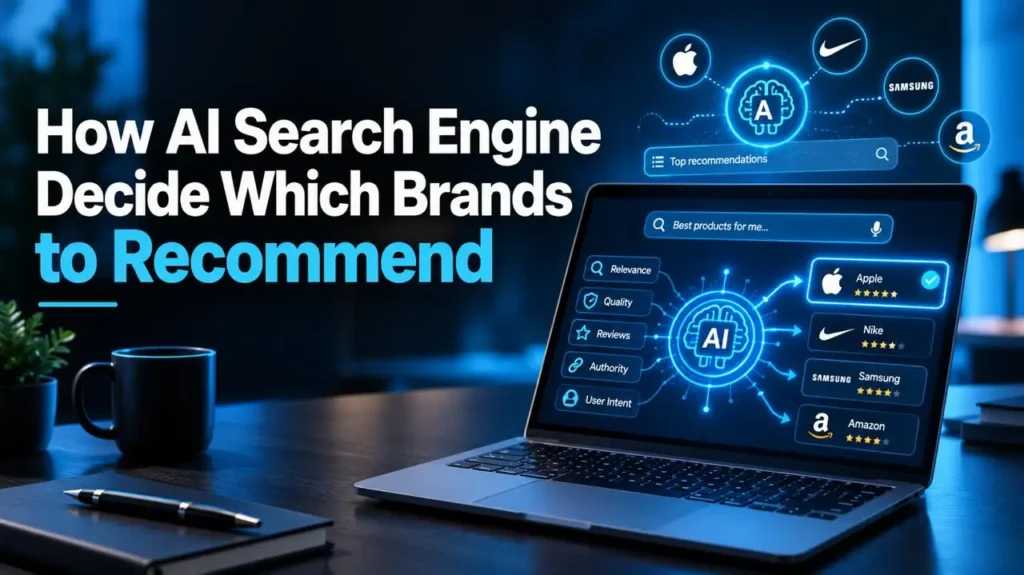
How AI Search Engines Decide Which Brands to Recommend

How AI Search Engines Decide Which Brands to Recommend A client called me last week, a bit confused. He had done everything his previous marketing person told him. Website was there, Google Business Profile was updated, even a few blog posts on the site. But when he asked ChatGPT “best furniture shop in Malappuram”, his shop did not come up. Two competitors did. This is becoming a very common question now. Not “why am I not ranking on Google”, but “why is AI not recommending my brand”. And honestly, these are two different games, even though they look similar from outside. Search Engines and AI Engines Are Not the Same Thing Anymore For years, ranking meant one thing. Get your website to show up on the first page of Google. You optimised keywords, built backlinks, kept your site fast, and if you did it right, you showed up. Now there is a second layer running alongside this. Tools like ChatGPT, Google AI Overviews, Perplexity, and voice assistants do not just list ten blue links. They read through information, pick what they think is the best answer, and present it directly, sometimes without the user ever clicking a website at all. This means your business is not just competing for a spot on a results page anymore. It is competing to be the answer itself. And that is a very different battle. So How Does an AI Engine Actually Pick a Brand I have spent a good amount of time testing this with different client businesses, and a pattern keeps repeating. First, these AI tools pull heavily from content that clearly and directly answers a question. Not vague marketing language, but actual, specific information. If someone asks “which digital marketing expert in Malappuram handles small business SEO”, the AI is scanning for content that answers exactly that, in plain words, not buried under fancy taglines. Second, consistency across the internet matters a lot more than people realise. If your business name, services, and location are mentioned the same way across your website, Google Business Profile, directories, and social media, AI tools trust that information more. If one place says you are a “digital marketing agency” and another calls you a “web design freelancer”, the AI gets confused about what you actually do. Third, reviews and mentions from other sources carry real weight. AI engines are not just reading your own website, they are reading what other people and other websites say about you. A local business directory mentioning your name, a genuine Google review describing what you did well, even a mention in someone else’s blog post, all of this builds what these systems treat as trust signals. Fourth, structured and clearly organised content performs better. Content with clear headings, direct questions and answers, and simple explanations tends to get pulled into AI answers more often than long, unstructured paragraphs that bury the actual point somewhere in the middle. Why This Matters More for Small and Local Businesses Big brands already have thousands of mentions across the internet. A small business in Kerala does not have that advantage naturally. But here is the interesting part, AI recommendation is not only about brand size, it is heavily about relevance and clarity. A small tailoring shop in Malappuram that clearly states what it does, where it is located, and answers common customer questions directly on its website and Google profile can actually get picked over a bigger, less specific competitor, simply because the AI found a clearer, more relevant answer. This is genuinely good news for small businesses, if they approach it the right way instead of ignoring it completely. What You Can Actually Do About It Start by writing content that answers real questions your customers ask, in plain and direct language. Instead of writing “we provide top quality services”, write “we deliver furniture within three days across Malappuram district” or whatever is actually true and specific to your business. Keep your business information exactly the same everywhere. Same name, same service description, same location details, across your website, Google Business Profile, and every directory you are listed on. Ask genuine customers to leave detailed reviews, not just star ratings. A review that says “fixed my AC within an hour and explained the issue clearly” gives AI tools far more useful information than a plain five star rating with no words. Get mentioned on other relevant websites where possible, local directories, community pages, even guest posts on other blogs. Each mention builds the kind of trust signal these systems are looking for. Structure your website content clearly, with actual headings and direct answers, not long winding paragraphs that make a reader, or an AI system, work hard to find the point. SEO vs AEO: What’s the Actual Difference People often mix these two up, so here is a simple side by side to make it clearer.     Traditional SEO AEO (Answer Engine Optimisation) Goal Rank on Google’s results page Become the actual answer AI gives Where it shows up Search engine results page ChatGPT, AI Overviews, Perplexity, voice assistants What matters most Keywords, backlinks, page speed Clarity, consistency, structured answers User action User clicks your website link User often gets the answer without clicking anywhere Content style Long, keyword optimised pages Direct, specific, question and answer style content Trust signals Backlinks from other websites Consistent info across platforms plus genuine reviews Both work together, not against each other. Good SEO groundwork actually makes AEO easier to build on top of.   A Small Example That Explains This Well Take two hypothetical bakeries in Malappuram. Bakery A has a website that just says “we bake the best cakes in town, contact us for orders.” Bakery B has a website and Google profile that says “we deliver custom birthday cakes across Malappuram within 24 hours, starting at a specific price, with photos of actual past orders and real customer reviews mentioning taste and delivery time.” When someone asks an AI tool “which […]

Blogs

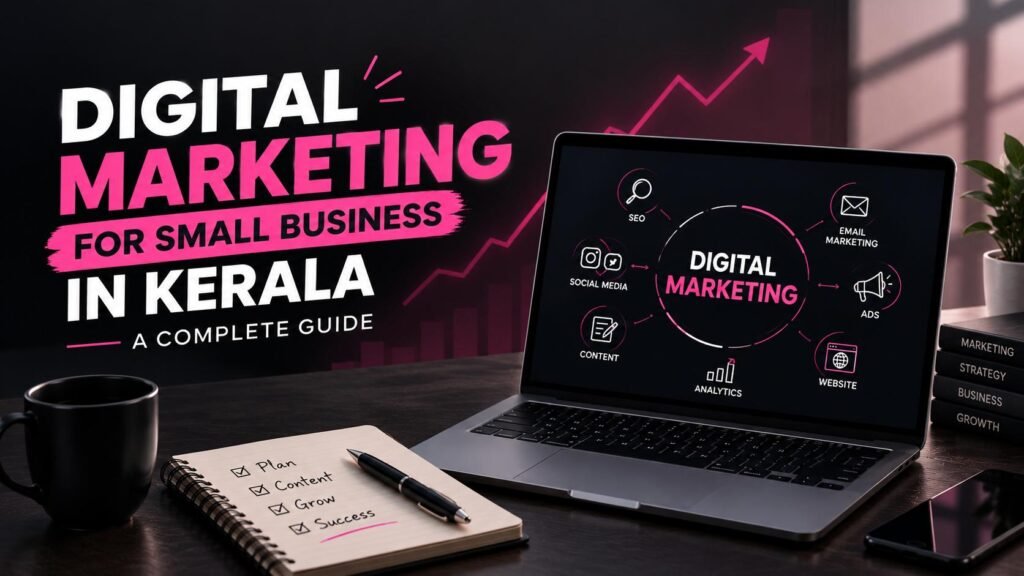
Digital Marketing for Small Businesses in Kerala: A Complete Guide

Digital Marketing for Small Businesses in Kerala: A Complete Guide If you run a small business in Kerala, you already know the market here is not the same as it was five years back. Earlier a good product and word of mouth was enough. Now people search first, compare first, and only then they walk into your shop or call you. This guide is for every small business owner in Kerala who wants to actually understand digital marketing, not just hear buzzwords from someone trying to sell a package. Why Small Businesses in Kerala Cannot Ignore This Anymore Whether you run a textile shop in Malappuram, a restaurant in Kozhikode, or a small clinic in Thrissur, your customer today checks Google or Instagram before making any decision. If your business is not visible there, you are simply not part of the choice. This is not something that will happen in future, it is already happening right now, quietly, in every district of Kerala. What Digital Marketing Actually Includes A lot of shop owners think digital marketing means only posting photos on Instagram. That is just one small part of it. Real digital marketing for small businesses in Kerala includes several things working together. *SEO (Search Engine Optimization)* helps your business show up when someone searches on Google for what you sell, without paying for every click. This is slow but it builds long term visibility that keeps bringing customers . *Google My Business* is one of the most underused tools among Kerala businesses. A properly filled profile with correct timings, photos and reviews can bring more customers than a costly ad campaign, and it is completely free to set up. *Social Media Marketing* on Instagram and Facebook keeps your brand in front of people daily. Kerala audience responds well to genuine, local content, not overly polished corporate style posts. *Paid Ads through Google and Meta* bring immediate results when you need customers fast, especially useful during festival seasons or new product launches. *Content Marketing* means writing or creating videos that answer real questions your customer already has, which slowly builds trust before they even contact you. *Website Development* matters more than people realise. A slow or outdated website loses customers within seconds, especially since most searches now happen on mobile phones. Common Mistakes Kerala Small Businesses Make Many businesses here start digital marketing with excitement and then leave it half done. A common pattern is posting actively for two weeks and then going silent for two months. Another mistake is having a Google listing with wrong working hours or no photos at all. Some businesses also copy whatever their competitor is doing instead of building something that actually reflects their own brand. A Simple Starting Point for Any Small Business If you are just starting out, do not try to do everything at once. First fix your Google Business Profile properly. Then build a consistent posting habit on one social platform, even if it is just two posts a week done well. Once this foundation is set, slowly add paid ads or proper SEO work depending on your budget and goals. Why Local Understanding Matters A strategy copied from a Delhi or Mumbai business will rarely work the same way here. Kerala audience trusts differently, buys differently, and even the tone of communication that works elsewhere can feel disconnected here. This is exactly why working with someone who understands the local market, and not just generic marketing theory, makes a real difference for small businesses across Kerala. Quick Checklist Before You Start If you want to check where your own business currently stands, go through this list honestly. Does your business show up on Google Maps when someone nearby searches for what you sell? Are your Google Business Profile timings, photos, and contact number updated? Has your Instagram or Facebook page posted anything in the last two weeks? Do you have WhatsApp Business set up with a proper catalogue? Does your website, if you have one, open properly and quickly on a phone? Do you have even five genuine customer reviews online? If most of these answers are no, that is exactly where to begin. Not with ads, not with a big budget campaign, just with these basics. Common Questions Small Business Owners Ask Me Do I really need a website, or is Instagram enough?Instagram builds awareness, but a website builds trust, especially for anyone comparing you with a competitor before deciding. If your budget only allows one right now, start with a simple, fast loading website and a properly set up Google Business Profile . How soon will I see results? Google Business Profile improvements and WhatsApp setup can bring enquiries within days. SEO and organic social media growth usually take a few months of consistent effort before you see a real, steady flow of customers. Is Malayalam content better than English for my page? It depends on your customer base, but for most local businesses in Kerala, a natural mix of Malayalam and English performs better than either language alone. It feels more like a real person is running the page, not a company.   Can I do all of this myself without hiring anyone? Some parts, yes, especially Google Business Profile setup and basic posting. But things like SEO strategy, ad campaigns, and consistent content planning usually work better with someone who does this daily, simply because it saves you the time and the trial and error.   Key Takeaways Word of mouth still matters in Kerala, but it is no longer enough on its own. Small businesses do not need a big budget to start, they need consistency. Google Business Profile and WhatsApp Business often bring the fastest, cheapest results. Local, authentic content outperforms polished corporate style posts here. Digital marketing for small businesses works slowly and steadily, not overnight. If you are a small business owner in Kerala trying to figure out where your business currently stands online, that conversation is always worth having […]

Scroll to Top
Powered by Joinchat